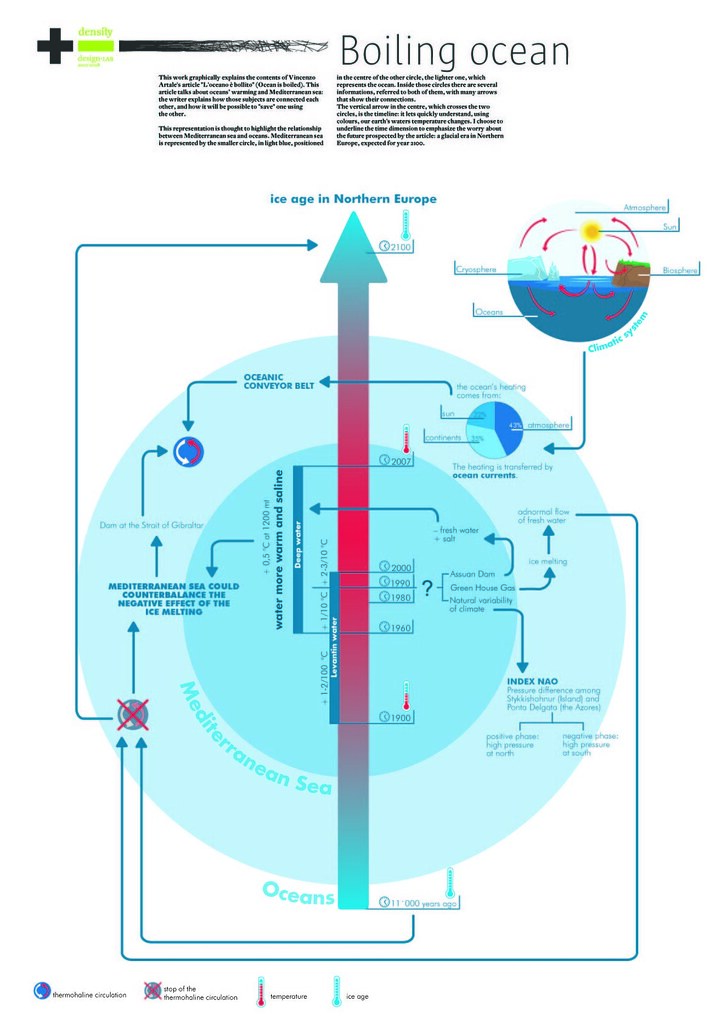
Graphs, Charts, and other ways of mapping information in a visually appealing, clear way.
Monday, October 13, 2008
Wednesday, October 8, 2008
DRAPLIN DESIGN CO.
Intro to Contemporary Art
What is the nature of art? Object becomes "art" by virtue of selection or nomination on the part of the artist (a la Marcel Duchamp). Is there no intrinsic value?
Marcel du Champ - 1912, into cubism and abstraction. Takes nude form and expresses it mechanically.
Abstract Expressionism - male dominated movement, mostly male artists. Kandinsky was one of these Russian abstract expressionists. He focused on music as an art form. He was more about an "essence" rather than purely what you see.
The abstract form becomes ideal due to the idea that aesthetic pleasure is found in painting itself and not the subject. Ideas of abstraction in art are at this time being paired with philosophy; it becomes very personal.
"Neo-Dada" Art Movement - Bridge between Abstraction, Expressionism, and Pop art.
"Watershed Years" 1965-1985: Pop art enters the realm of fine art.
1970s: Minimalism, Post-Minimalism, process art, earth works, body art, feminist art, conceptualism, photorealism, video, film, performance art, etc. Themes of this time period are critique of institutional structures, role as artist in society.
1960s-1970s: Explosion of anti-form, process-oriented practices: environment, performances, happenings.
Conceptual Art: Concept is primary over material; the artist isn't always the "maker" in the traditional sense but sometimes the director or etc.
1980s-1990s: Art reflects consumerism, provides "food for thought."
Postmodernism: Art & attitudes from later 20th century. Emphasis on content and "impurity of works" that mix mediums, embrace diversity, use vernacular imagery. Embraces modernism. Represents a dissolution of traditional categories. Free from the dogma of modernism.
Eventually abstract impressionism becomes irrelevant because people want to start seeing art with a message. -Art becomes DE-MATERIALIZED and exists only as a kind of possibility of the mind (Does art have to be about objects at all?). -Art is Philosophy; it is not about process or technique, it is about the theory (A. Danto).
Conceptualist Artist Joseph Kosuth (American, born 1945). One and Three Chairs. 1965. Wood folding chair, mounted photograph of a chair, and photographic enlargement of a dictionary definition of "chair."
"The work One and Three Chairs can be seen to highlight the relation between language, picture and referent. It problematizes relations between object, visual and verbal references (denotations) plus semantic fields of the term chosen for the verbal reference. The term of the dictionary includes connotations and possible denotations which are relevant in the context of the presentation of One and Three Chairs. The meanings of the three elements are congruent in certain semantic fields and incongruent in other semantic fields: A semantic congruity ("One") and a threefold incongruity ("One and Three"). Ironically One and Three Chairs can be looked upon as simple but at the same time be a rather complex model, of the science of signs. Looking at the piece, it causes you to ask yourself what's real here. What's real here, is the fact that the definition is real. This being that without a definition, you would never know what an actual chair really is.
There exist different interpretations of these semantic and ontological aspects, some of them refer to Plato´s Republic (Book X) and others refer to Ludwig Wittgenstein´s Tractatus (see Inboden) or to Charles S. Pierce's triad icon-index-symbol (see Tragatschnig). Dreher discusses the semantic problems of One and Three Chairs as inclusions of circles which represent semantic fields (see Dreher).
The work tends to defy formal analysis because one chair can be substituted for another chair, rendering the photograph and the chair photographed elusive to description. Nevertheless the particular chair and it's accompanying photograph lend themselves to formal analysis. There are many chairs in the world thus only those actually used can be described. Those chairs not used would not be analyzed. The enlarged dictionary definition of the word chair are also open to formal analysis, as is the diagram containing instructions of the work." -From Wikipedia
Joseph Kosuth, Ex-Libris (Wittgenstein's Gift), 1990. Lithograph on vellum paper with following quote:
"What you are regarding as a gift is a problem for you to solve." -Wittgenstein
Gives to the concept that there is more than one way to interpret art, a post-modernist theme.
Sol LeWitt, Wall Drawing #146, September 1972.
Value we find is knowledge and thought gained through artistic production, which is more important than the finished product.
Sentences on conceptual art by Sol Lewitt:
- Conceptual artists are mystics rather than rationalists. They leap to conclusions that logic cannot reach.
- Rational judgements repeat rational judgements.
- Irrational judgements lead to new experience.
- Formal art is essentially rational.
- Irrational thoughts should be followed absolutely and logically.
- Since no form is intrinsically superior to another, the artist may use any form, from an expression of words (written or spoken) to physical reality, equally.
- For each work of art that becomes physical there are many variations that do not.
- One usually understands the art of the past by applying the convention of the present, thus misunderstanding the art of the past.
- Banal ideas cannot be rescued by beautiful execution.
1. The artist may construct the piece.
2. The piece may be fabricated.
3. The piece need not be built. Each being equal and consistent consistent with the intent of the artist, the decision as to condition rests with the receiver upon the occasion of receivership.
Art is the hands of the receiver.
Wednesday, July 30, 2008
In the process of developing our sites, the professor gave us two very interesting links... one with examples of inspiring portfolios, and one with not-so-great portfolios.
I really enjoyed these links, especially seeing the good portfolios. In many of them not only was the layout great, but the design work was amazing.
It also talks about the use of small thumbnails as a way of showing work, and why it isn't always the best thing to do. It mentions that when you use thumbnails that show only a small portion of your work, it doesn't really give you any motivation to click on one or the other. As thumbnails many times being part of the design of the website, I believe it may be better to make them bigger so that they show more of the work's uniqueness before the user even clicks on them for full version. Anyway, it has much more information about it on the link.
THE LINKS:
http://astheria.com/design/portfolios-that-accomplishgoals - portfolios that accomplish goals
http://astheria.com/design/my-last-portfolio-sucked-yours-might-too - portfolios that kinda suck
Tuesday, July 29, 2008
Tuesday, July 22, 2008
More Work

Original size was 16" x 22".
Thursday, July 3, 2008
Some of my work
This first design was created using only the letters "g" and "d." The grid in the middle was incorporated because it was part of the instruction for the assignment. We had to come up with a grid that resonated and worked well, considering the colors and the letters "g" and "d"; including how they were arranged, what colors they were going to be, and so on.
This third image is a pepsi label I design for the Pepsi Can contest. Whoever won of course got their design on pepsi cans all over the place and won a bunch of money. Unfortunately I didn't win. :( But I still like the design.
This fourth image was a class assignment. The goal was to create a catalog cover for Portland State's 2009 Summer Session classes. The final version is slightly different - the "e" in summer is moved to the left a bit, and the small print in the lower left is spaced better. I'll have to find the final version later. Anyway, we had to use type in an interesting way for our catalog cover.
This fifth image was also a school assignment. The objective was to create a cover for a technical design graphics manual. We had to find technical graphics and create unique illustrations from them. So I found some technical graphics, took them into illustrator and re-drew parts of them and put the parts together to create my own unique illustration.
More to come later!